formerly known as Deep Learning in Practice (but there is as much theory as practice)
MVA and MscAI masters, and CentraleSupelec cursus, January-March 2026
News : (reload for fresher news...)
- Comments welcomed! about this class here
- Link to hand in TP6 available
- Final exam will take place at 9h on Thursday 26th in amphi Alain Aspect
- Project defenses will start at 10h30 (after the exam) in rooms 1X27 and 1X31
- TP6 (for chapter 7) is online
- Recordings of session 6 added
- Recordings of session 6 added The previous course (January-March 2025) can be found there; the 2026 course will follow more or less the same lines, though not exactly.
Registration is closed for the 2026 course.
However to just access the recordings of the course (without attending it), you can still register here.
Requirements : having already followed a course about neural networks (this is an advanced deep learning course).
Typical mathematical notions used: differential calculus, Bayesian statistics, analysis, information theory.
Teaching team :
Most lectures: Guillaume Charpiat
Practical sessions / project supervision: Félix Houdouin, Theofanis Ifaistos, Théo Rudkiewicz, Jules Soria and Luca Teodorescu (incl. materials by numerous previous great teachers: Victor Berger, Alessandro Bucci, Styliani Douka, Loris Felardos, Rémy Hosseinkhan, Wenzhuo Liu, Matthieu Nastorg, Francesco Pezzicoli, Cyriaque Rousselot and Antoine Szatkownik)
Course validation : we will let the choice between 2 possibilities :
either by practicals:
5 practicals (notebooks), presented in class, to do at home in groups of 1-3 people, and to hand in within 2 weeks
Schedule :Note that the schedules are irregular and that locations vary.
Sessions take place on Thursdays, 9h45 - 13h (3 hours course + a 15 minute break), at various places at CentraleSupelec and ENS Paris-Saclay:
Session 1 : Thursday January 22nd (théâtre Rousseau, Bouygues building -- known as room e.070)
Session 2 : Thursday January 29th (amphi Hodgkin, ENS Paris-Saclay -- known as 0i10) session cancelled: watch the recordings online and come ask questions and discover the TP at 11h (the visio link will be sent by email + on the Discord forum)
Session 3 : Thursday February 5th (amphi Hodgkin, ENS)
Session 4 : Thursday February 12th (amphi Hodgkin, ENS)
3 week break
Session 5 : Thursday March 5th (amphi Hodgkin, ENS)
Session 6 : Thursday March 12th (amphi Hodgkin, ENS)
Session 7 : Thursday March 19th (amphi Hodgkin, ENS)
Session 8 : Thursday March 26th at 9h (amphi Alain Aspect, ENS) - Final exam + project defenses
Location info: bus stop "Moulon" + 4 minute walk
to the Bouygues building
or to the ENS Paris-Saclay building (amphi Hodgkin, numbered 0i10, ground floor, west building, accessible from the garden).
Common transportation planification: Île de France mobilités.
Program : (subject to a few potential modifications)
Session 1 : Deep learning vs. classical machine learning and optimization → Practical session: hyperparameters and training basics (PyTorch refresher): instructions and the 2 problems of TP1: Pb 1, and Pb 2 with its dataset. NB: TP1 will not be graded. → Good practice: github repo with general MLOps advice (code repo management with git, logging seeds and arguments of experiments, job scheduler to use computing clusters...) → (Reminder: optional; register beforehand!) Link to hand in TP1 (same password as usual) →Practical tips and tricks to train neural networks →Environment used in practical sessions →[2026]Course notes (pdf) (handwritten with drawings) and lesson summary (html) →[2026] Video recording: part 1 [140MB] and part 2 [75MB]
Session 4 : Small data and frugal AI: weak supervision, transfer and compression → Practical session on transfer learning: notebook →Link to Codabench competition to submit TP4 →Link to hand in TP4 (notebook, utils.py and images) →[2026]Course notes (pdf) (handwritten with drawings) and [2026]lesson summary → Video recording: [2026]about projects and second part of the course. Unfortunately, the recording of the first part failed, but most of that part (except fine-tuning with LoRA or additional token, as well as tensorization and pruning) can be found in previous years's recordings: [2023]part 1 [500MB] and part 2 [500MB]
Session 5 : Issues with datasets (biases, privacy...) →[2026]Course notes (pdf) (handwritten with drawings) and lesson summary (html) →[2026] Video recording: part 1 [110MB], part 2 [140MB]
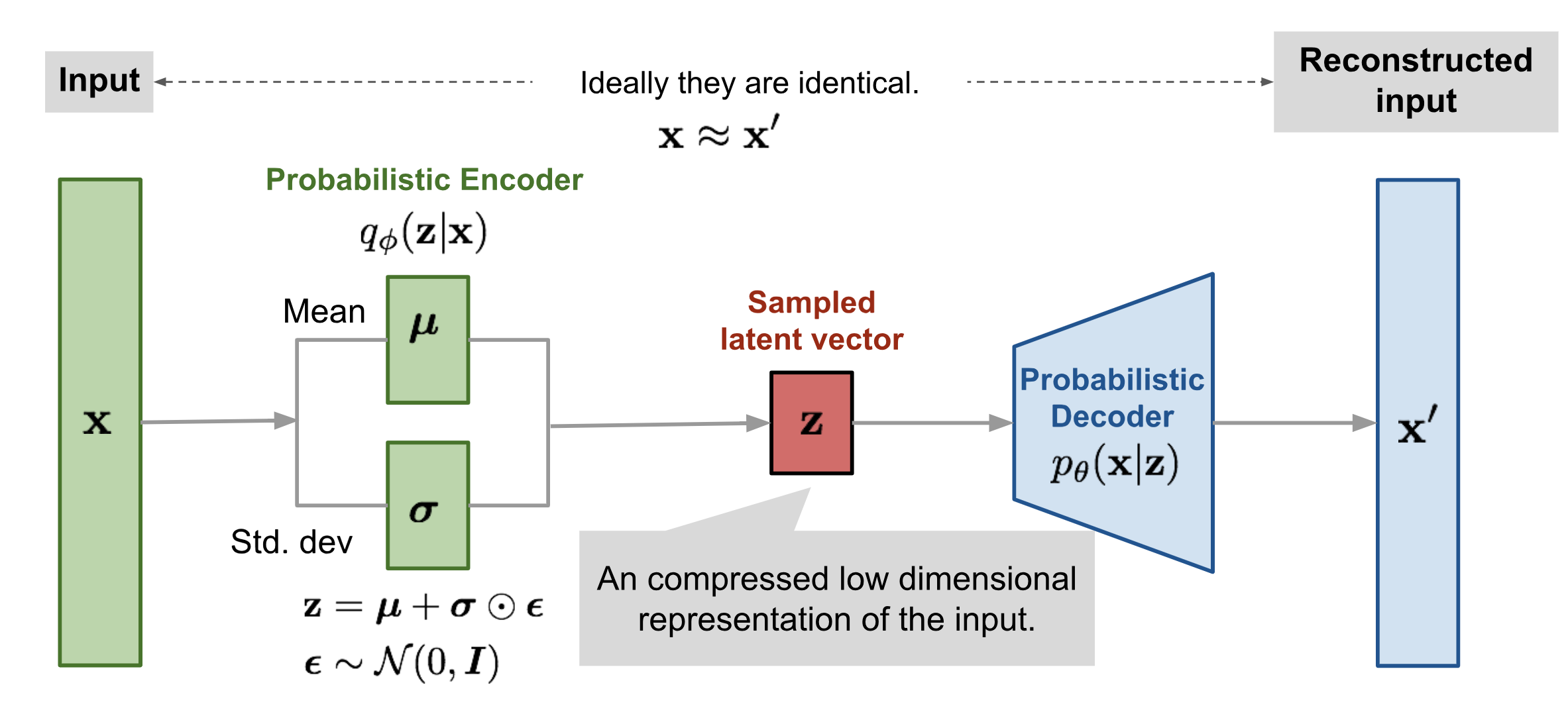
Session 7 : Auto-DeepLearning (in particular Neural Architecture Search) by guest speaker Alex Davey, and Generative models (GAN, VAE, Normalizing Flows, Diffusion Models and Flow Matching) →[2026] Video recording of the presentation about Neural Architecture Search [140MB] by Alex Davey →Link to hand in TP6 →[2026]Course notes (pdf) on metrics and generative models (handwritten with drawings) →[2026] Video recording of the course on generative models [100MB] and TP6 presentation [20MB] → Practical session on generative models: TP6 notebook + images included by the notebook: VAE, diffusion model, and auxiliary detail. →[2025]AutoML slides (Optimization of Learning Workflows Hyperparameter Optimization, Neural Architecture Search, Ensemble) by Romain Égelé and its DeepHyper repository
Session 8 : Final exam
Ressources: links to introduction to python, numpy, classical machine learning + online deep learning courses
Guaranteeing the absence of privacy leakage of generators trained on sensitive data, using an Extreme Value Theory framework on distances to closest neighbors, with Cyril Furtlehner (see arxiv 2510.24233)
Links between explainability, frugal AI, robustness and formal proofs of neural networks: looking for statistically-meaningful concepts and enhancing them. In collaboration with PEPR IA SAIF.
and lots of other very interesting topics, on demand (deep learning to speed up fluid mechanics simulations, for dynamical systems, for physics; learning causality, ...)